


Chevy Brake Service in Plainfield, IL: Warning Signs, Inspection Intervals, and What’s Included
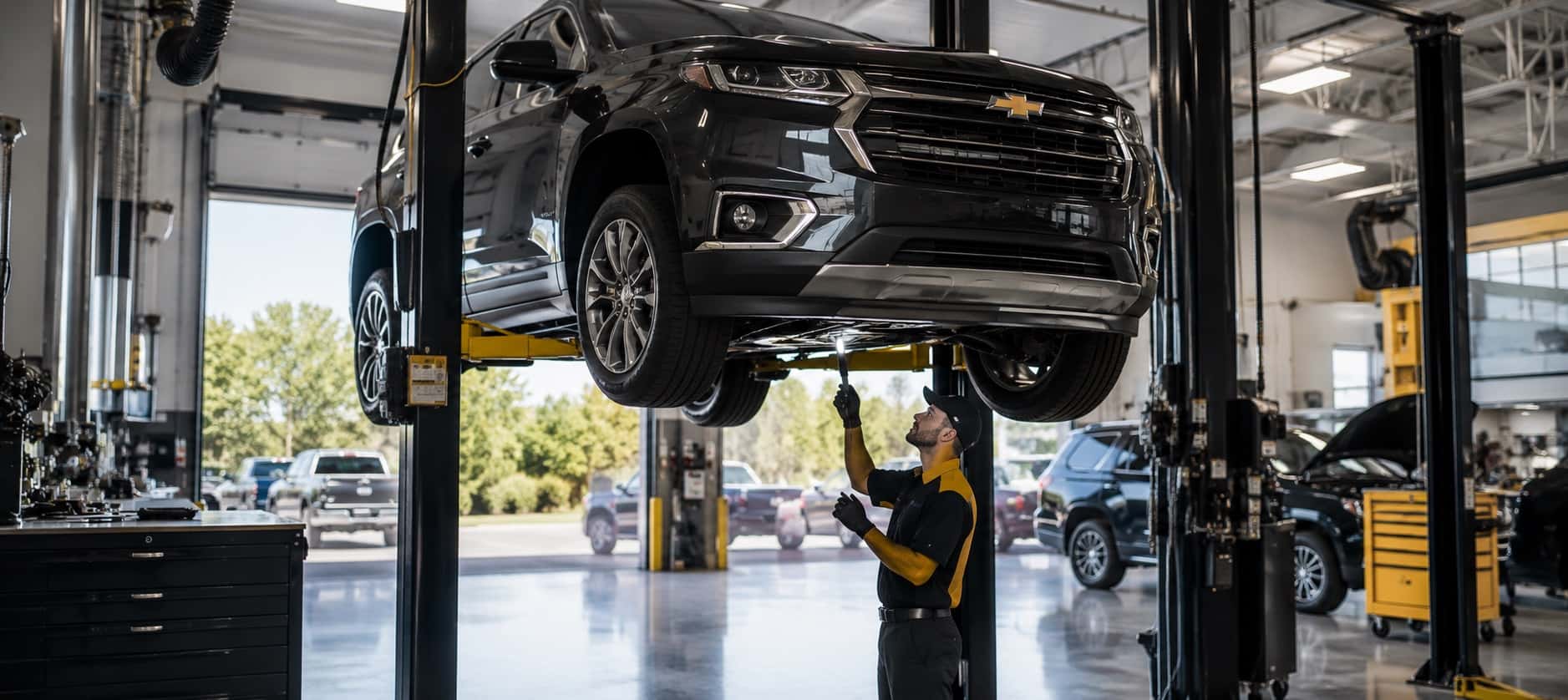
Brakes are the system drivers notice last and need most. They degrade so gradually that the change in pedal feel becomes the new normal long before anyone thinks to have them checked — and then a squeal on Route 59 or a shudder coming down an off-ramp finally forces the issue. For Plainfield, IL drivers, fall is the right time to get ahead of it, because winter is when compromised brakes stop being an annoyance and start being a genuine hazard. This guide covers the warning signs worth acting on, how often brakes should actually be inspected, what a Chevrolet-certified brake job includes, and how to tell a real recommendation from an unnecessary one.
What Are the Warning Signs Your Chevy Needs Brake Service?
The signs worth acting on immediately are grinding, a pedal that sinks or feels spongy, pulling to one side while braking, and any dashboard brake warning light. Squealing is worth attention but is often the built-in wear indicator doing exactly its job — telling you replacement time is approaching. Grinding is different: that is typically metal on metal, and it means damage is accumulating with every stop.
- Grinding: stop driving on it and get it inspected promptly — this usually means worn-through pads.
- Squealing or chirping: often the wear indicator; schedule an inspection soon.
- Soft or sinking pedal: can indicate a fluid or hydraulic issue and should be checked right away.
- Vibration or shudder through the pedal or steering wheel during braking.
- Pulling to one side when braking, which suggests uneven wear or a sticking caliper.
- Longer stopping distances — the most dangerous sign precisely because it creeps up gradually.
- Brake warning light on the dashboard, which should never be ignored.
How Often Should Chevrolet Brakes Be Inspected?
A good rule is to have brakes inspected at every tire rotation — roughly every six months for most drivers — since the wheels are already off and the inspection adds very little time. That cadence catches wear early, when you have options, rather than at the point where rotors have already been damaged. Recommended intervals vary by model and driving conditions, so confirm what applies to your vehicle.
- At every tire rotation, since access is already there.
- Before winter, when braking performance matters most.
- Any time you notice a change in pedal feel, noise, or stopping distance.
- More frequently if you tow, carry heavy loads, or drive mostly stop-and-go.
How Long Do Brake Pads Last on a Chevrolet?
Brake pad life varies enormously — anywhere from roughly 25,000 to 70,000 miles or more — because it depends far more on how and where you drive than on the vehicle itself. Stop-and-go commuting wears pads dramatically faster than highway driving, and front pads typically wear faster than rear on most vehicles. Rather than guessing from mileage, rely on a measured inspection, which gives you actual remaining thickness.
- Driving pattern is the dominant factor — city driving is much harder on pads.
- Vehicle weight and towing increase load on the braking system.
- Terrain and traffic — frequent hard stops accelerate wear.
- Front versus rear: fronts generally handle more braking force and wear sooner.
Do Rotors Need Replacing Every Time Pads Are Replaced?
No — rotors are replaced when they are worn below minimum thickness specification, warped, or damaged, not automatically with every pad change. A technician measures rotor thickness and checks for runout to make that determination, and you should feel comfortable asking to see the measurements. That said, rotors that are near minimum spec are often better replaced alongside new pads, because installing fresh pads on marginal rotors tends to produce noise and vibration.
- Rotors are measured against a minimum thickness specification stamped on the part.
- Runout — a measurement of warping — is checked with a dial indicator.
- Scoring, heat cracking, or rust pitting can require replacement regardless of thickness.
- Ask for the measurements; a legitimate recommendation comes with numbers.
What Does a Chevrolet-Certified Brake Job Include?
A complete brake service covers far more than swapping pads: it includes inspecting and servicing the caliper hardware, checking hoses and lines, measuring rotors, evaluating brake fluid, and properly bedding in the new components. The hardware is the part most often skipped by lower-cost shops, and it is a common reason brakes squeal or wear unevenly shortly after a “brake job.” Ask specifically what is included before authorizing work.
- Measurement of pad thickness and rotor thickness and runout.
- Inspection and lubrication of caliper slides and mounting hardware.
- Inspection of brake hoses, lines, and fittings for wear or leakage.
- Brake fluid condition evaluation and moisture testing.
- Inspection of the parking brake mechanism.
- Proper bed-in procedure so new pads and rotors mate correctly.
Why Does Brake Fluid Need Replacing?
Brake fluid is hygroscopic, meaning it absorbs moisture from the air over time, and that moisture lowers its boiling point and can corrode internal components. Fluid that looks fine can still be well past its useful life, which is why it is tested rather than judged by appearance. Replacement intervals vary by model and model year, so check your maintenance schedule or ask your service advisor.
How Do Plainfield Winters Affect Your Brakes?
Illinois road salt is the main culprit — it accelerates corrosion on rotors, caliper hardware, and brake lines, and it is why vehicles in the Chicago area often need hardware attention that vehicles in milder climates do not. Add slush packing into wheel wells, surface rust forming overnight on rotors, and more frequent hard stops on slick roads, and winter is genuinely the harshest season for a braking system.
- Road salt corrosion on rotors, hardware, and brake lines.
- Sticking caliper slides from corrosion, causing uneven pad wear.
- Surface rust that forms overnight — usually harmless, and it wipes off in the first few stops.
- Slush and ice buildup around brake components.
- More frequent hard braking in poor traction conditions.
What Do Different Brake Noises Actually Mean?
Each noise points to a different condition, and learning to distinguish them helps you judge urgency. A high-pitched squeal on light braking is usually the wear indicator. A harsh grinding under any braking usually means worn-through pads contacting the rotor. A rhythmic pulsing noise that matches wheel speed often indicates rotor irregularity.
- High-pitched squeal: typically the wear indicator — schedule an inspection.
- Grinding: likely metal-on-metal contact — have it inspected promptly.
- Rhythmic pulsing or thumping: often rotor thickness variation or warping.
- Clunking on braking: can indicate loose hardware or a suspension component.
- Morning-only squeak that disappears: usually harmless overnight surface rust.
Do Genuine GM Brake Parts Make a Difference?
Genuine GM brake components are engineered to the friction characteristics, heat tolerance, and dimensions your specific Chevrolet was designed around, which is what keeps pedal feel and stopping performance consistent with how the vehicle left the factory. Aftermarket parts vary widely in quality; some are excellent and some produce noise, dust, or inconsistent performance. Since braking is the system with the least margin for compromise, parts choice matters more here than almost anywhere else on the vehicle.
What Should You Expect at a Brake Service Appointment?
A brake appointment at Webb Chevy Plainfield starts with an inspection and measurement, followed by a clear explanation of findings and a written estimate before any work begins. You should receive actual numbers — pad thickness, rotor measurements — not just a recommendation. If you have noticed a specific symptom, describe it precisely, including when it happens and at what speed, since that helps the technician reproduce and confirm it.
Quick Overview: Chevy Brake Service at a Glance
| Symptom | Likely Cause | Urgency |
|---|---|---|
| Squealing on light braking | Wear indicator contacting rotor | Schedule soon |
| Grinding | Pads worn through | Inspect promptly |
| Pedal vibration | Rotor thickness variation | Schedule soon |
| Soft or sinking pedal | Possible hydraulic or fluid issue | Have checked right away |
| Pulling while braking | Uneven wear or sticking caliper | Schedule soon |
| Morning squeak that clears | Overnight surface rust | Usually normal |
How to Schedule Brake Service at Webb Chevy Plainfield
- Note the specific symptom — the noise, when it occurs, and at what speed.
- Check for a dashboard brake warning light and mention it when you book.
- Book online through the Webb Chevy Plainfield service scheduler, or call (815) 230-6041.
- Ask for a measured inspection with pad and rotor numbers, not just a verdict.
- Request a written estimate before any work is authorized.
- Ask what hardware service is included — caliper slides and mounting hardware matter.
- Follow the bed-in guidance your technician gives you for the first few hundred miles.
Key Takeaways
- Grinding, a sinking pedal, pulling while braking, and brake warning lights all warrant prompt inspection.
- Having brakes inspected at every tire rotation — roughly every six months — catches wear while you still have options.
- Pad life varies widely with driving pattern; a measured inspection beats any mileage estimate.
- Rotors are replaced based on measured thickness and runout, not automatically with every pad change.
- A complete brake job includes hardware service, hose inspection, and fluid evaluation — not just pads.
- Illinois road salt makes caliper hardware corrosion a real and recurring issue in Plainfield.
- Genuine GM brake parts are matched to your Chevrolet’s designed braking performance.
Frequently Asked Questions
Is it safe to keep driving if my brakes are squealing?
Squealing usually means the wear indicator is contacting the rotor, which is an early warning rather than an emergency — but it should be inspected soon, because continuing until the pads wear through leads to rotor damage. Grinding is a different matter and should be inspected promptly.
Why do my brakes squeak only on the first stop of the morning?
That is almost always a thin layer of surface rust that forms on the rotors overnight, especially in humid or wet conditions. It typically wipes away within the first few stops and is not a cause for concern. If the noise persists once you are underway, have it inspected.
Should I replace front and rear brakes at the same time?
Not necessarily. Front and rear brakes generally wear at different rates, with fronts usually wearing faster on most vehicles. Each axle should be evaluated on its own measured condition — replacing both when only one is due is unnecessary.
How do I know a brake recommendation is legitimate?
Ask for measurements. A legitimate recommendation comes with pad thickness in millimeters and rotor thickness measured against the minimum specification. If a shop cannot produce numbers, ask them to, and request a written estimate before authorizing work.
Do I need new brakes before winter in Plainfield?
Not automatically, but a pre-winter brake inspection is a sound idea. Stopping distances matter far more on snow and ice, and Illinois road salt accelerates corrosion on caliper hardware and brake lines. An inspection in the fall tells you whether you are entering winter with adequate margin.
Heading into an Illinois winter? Know exactly where your brakes stand before the first snow.
0 comment(s) so far on Chevy Brake Service in Plainfield, IL: Warning Signs, Inspection Intervals, and What’s Included